Inclusive Livelihoods in Addis Ababa

Donor: Direct Aid Program
Location: Addis Ababa

In Addis Ababa, people with disabilities especially women often face limited opportunities to earn a living or access training that could improve their livelihoods. Traditional jobs are scarce, and physical or social barriers make participation in the workforce even harder.

This project set out to offer an inclusive alternative: small-scale poultry farming. Chickens are wellsuited to urban households and require minimal mobility or space to manage. With the right support, they can provide both income and food security.

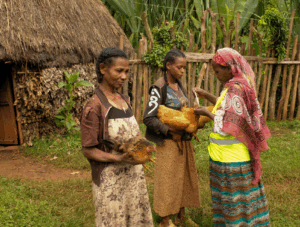
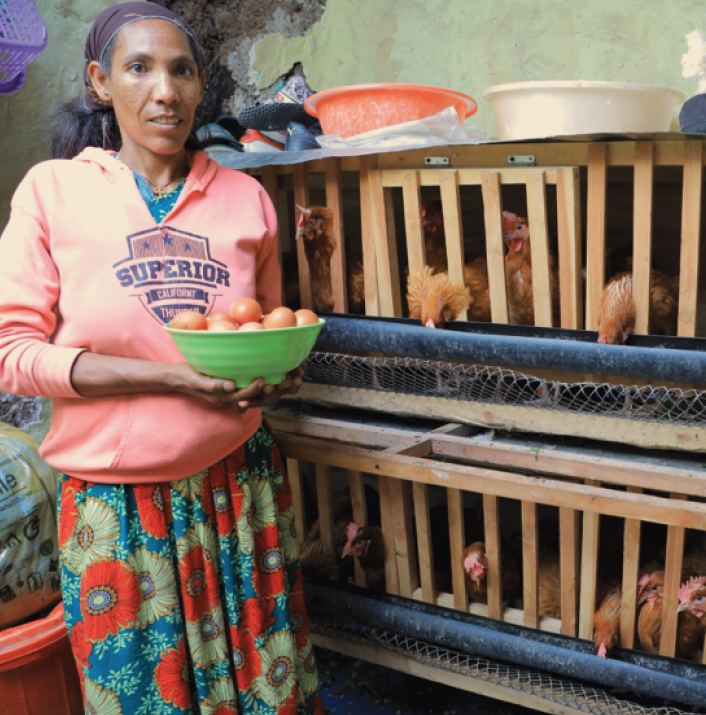
Over the year, 28 participants including single mothers and people with disabilities received practical training, coops, improved layer chickens, feed, and veterinary support. Many began earning income for the first time and reported regular access to eggs in their diets.
Ethiopia Kyeema DAP project
Ayalnesh

Ayalnesh lives in Addis Ababa with her husband, two children, and a nephew. Both she and her husband live with disabilities and previously relied on selling taper candles, and a small government safety net for income. Through the project, she received training, starter chicks, and supplies to start a small poultry business. In her first cycle, she earned around 1,000 ETB from egg sales, reinvesting over 50% in feed. Her family now has regular access to eggs, significantly improving their diet. The experience has also increased her confidence and enabled her to share her knowledge with others in the community.

Supporting Sustainable Poultry Health Champions in Ethiopia

Donor: DFAT Australian NGO Cooperation Program (ANCP)
Location: Bishoftu (Oromia Region), Bahir Dar, Gonder (Amhara region) and Sidama

Ethiopia Annual Report DFAt stats

A key pillar of our work in Ethiopia is strengthening the professional development and capacity of local education institutions in the One Health approach. By building the skills, knowledge, and networks of university staff and students, particularly in veterinary and public health fields, we are helping to ensure the long-term sustainability of the poultry value chain.

Our focus on capacity building includes everything from supporting student-led outreach to facilitating expert knowledge sharing across universities and institutions. These activities are helping to embed One Health thinking into the next generation of professionals and create a more resilient, responsive animal health system in Ethiopia.

Supporting One Health leadership through student clubs

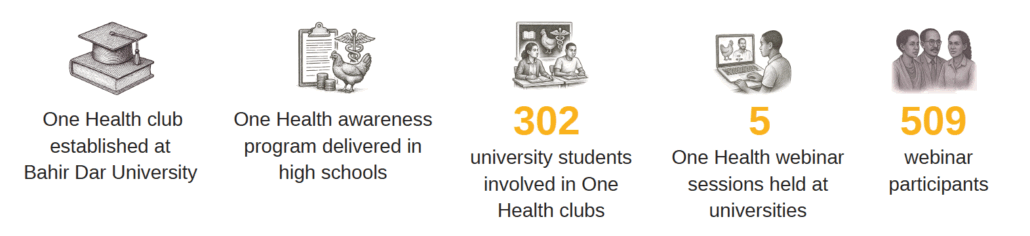
We continue to support the establishment and growth of One Health Clubs at Addis Ababa University (AAU), Bahir Dar University (BDU), and other institutions. These clubs bring together students from veterinary, medical, and environmental sciences to explore collaborative health solutions on campus and in surrounding communities.

This year, club members led two high school outreach programs, introducing students to the concept of One Health and its real-world relevance. The sessions focused on the connection between animal welfare, antimicrobial resistance, and public health, helping young people understand how everyday decisions affect the well-being of both people and the planet.

One Health webinars for university staff and educators

To further embed One Health into professional and academic practice, Kyeema delivered a series of webinars and in-person trainings for university staff, researchers, and lecturers. We facilitated five expert-led webinars and two in-person training sessions at Bahir Dar and Gondar universities Each session brought leading experts from government, academia, and international research institutions to share insights on One Health applications in Ethiopia and beyond.

These sessions helped deepen cross-disciplinary understanding, encouraged systems-based problem solving, and strengthened the foundation for improved Newcastle disease control especially in rural poultry systems.

Expanding Newcastle disease control in Ethiopia
Kyeema Ethiopia stats annual report

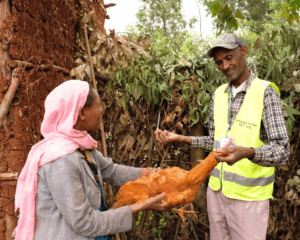
Our community vaccination program grew significantly this year, increasing the reach and impact of Newcastle disease (ND) control efforts across rural communities. More households are now accessing regular vaccination services, with trained local vaccinators playing a vital role in reducing poultry mortality and improving flock productivity. This not only safeguards family flocks but also strengthens the economic stability of households that rely on poultry for income, food, and financial security during times of need.

This year, newly trained and refresher-trained community vaccinators continued to build trust within their communities. Vaccination services were offered door-to-door at affordable rates, making ND control accessible even for the most remote households. As a result, households that once saw high seasonal mortality are now maintaining healthier, more productive flocks and in turn, improving family nutrition and generating more reliable income.

The program’s success lies not just in the number of birds vaccinated, but in the model itself: local ownership, sustainability, and knowledge-sharing are at its core. As vaccinators become local experts, they also become advocates spreading awareness about poultry care, disease prevention, and the value of regular vaccination. This community-led approach is key to achieving long-term control of ND and building a more resilient rural poultry sector across Ethiopia.

Ethiopia
Ethiopia
Ethiopia

Zenebech, Kyeema Ethiopa
Zenebech, poultry farmer

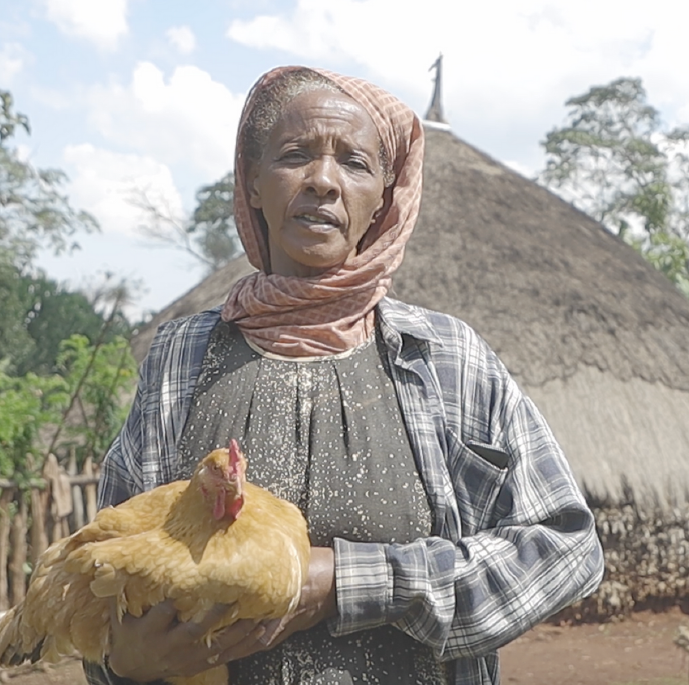
In Futahae Woreda, Aleta Chuko District, Zenebech tends to a modest flock of chickens in her backyard. She first joined the vaccination program four years ago after losing most of her birds during an ND outbreak. Since then, she’s become a local advocate for better poultry care.

With access to timely vaccinations, Zenebech now raises chickens not just for household consumption but also for income. Egg sales cover school fees and help put nutritious food on the table.

“For the past four years I have greatly benefited for this project. Thanks to the vaccination program, my poultry farming has become more profitable whether through egg production, selling chicks or raising and selling meat chickens. This has significantly improved my income.” – Zenebech

Fantu, community vaccinator

Fantu, also based in Gedibo Kebele, is one of the trained community vaccinators helping protect local flocks. A former poultry keeper herself, she became a vaccinator after seeing the devastation ND could cause.

Today, she goes door-to-door offering affordable vaccination services. At first, some community members were unsure but over time, the results spoke for themselves. Healthier chickens and fewer losses meant more eggs, meat, and income for families!

“Chicken mortality has significantly decreased. Initially the community was hesitant to participate but now they are very happy as vaccinated chickens are healthier, and deaths have greatly declined. For this service we charge only 3 birr per chicken for the service.” – Fantu