
Announcing the Winners of the 2025 Challenge Fund
Two bold solutions tackling one of the biggest barriers to inclusive development: Reliable Energy Access
Reliable energy changes everything. It powers healthcare, supports education, strengthens local economies, and creates opportunity. Yet for many remote and off grid communities around the world, stable and affordable energy remains out of reach.
Today, we are proud to announce the winners of the 2025 Challenge Fund.
For the past 20 years, Palladium has committed 1.5% of its profit before tax to its global giving platform, Let’s Make It Possible. Delivered in partnership with the Kyeema Foundation, this platform supports humanitarian relief, community projects nominated by employees, and an annual Challenge Fund that backs innovative solutions to global challenges.
This year, the Challenge Fund focused on Rural Energy Revolution: Efficient Energy Storage for Remote Communities, recognising that reliable energy access remains one of the most persistent barriers to inclusive development.
Across the world, remote and off grid communities continue to face unreliable or non-existent electricity. Weak grid connections and the intermittent nature of renewable energy can limit access to essential services including healthcare, education, refrigeration, and communications. Without effective energy storage, these challenges deepen social and economic inequality.
The Challenge Fund seeks practical, scalable solutions that combine innovation with local relevance and long-term impact.
PowerWells
Women-led energy storage innovation in Vanuatu
PowerWells is pioneering a locally led approach that connects clean energy access with waste reduction and economic opportunity.
Its Challenge Fund project focuses on developing solar battery enclosures made from compression moulded recycled plastic, designed to be manufactured by women from the Women I Tok Tok Tugeta (WITTT) network in Vanuatu. The enclosures will house PowerWells’ proven off grid solar systems, which use repurposed lithium-ion batteries sourced from e waste.
This phase builds on earlier work in Tanna, where women from the WITTT network deployed and maintained 115 off grid solar units, many using tools for the first time. Previously supported through DFAT’s Business Partnerships Platform, the next stage will prototype enclosure designs in Australia before laying the groundwork for future production in Vanuatu using locally available plastic waste.
By reducing reliance on imported components, the initiative aims to lower costs, strengthen climate resilience, and create new income opportunities for Ni Vanuatu women, while also helping address plastic pollution in fragile island environments.
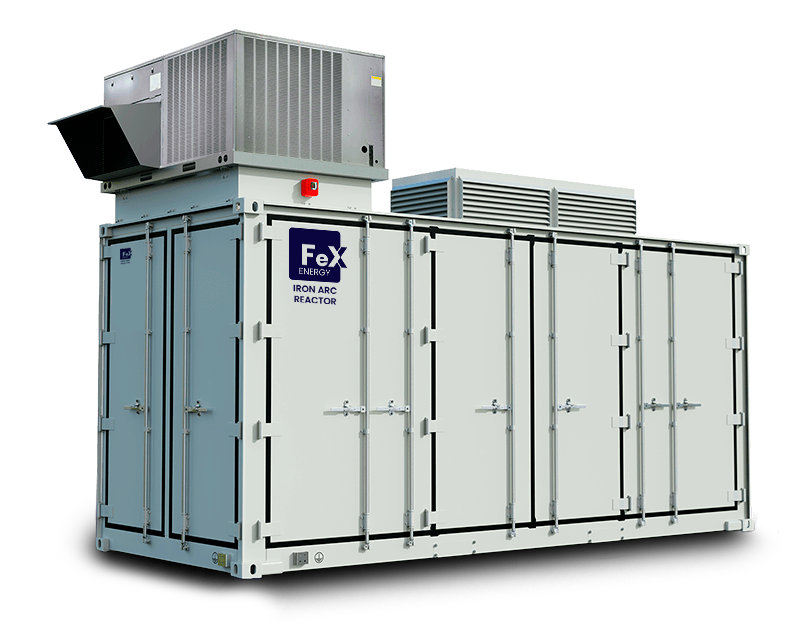
FeX Energy
Long Duration Energy Storage for Remote Communities in Canada
Canadian clean tech company FeX Energy is tackling another urgent challenge, reducing diesel dependence in remote and Indigenous communities across Canada.
Its Arc S system is a containerised, iron based thermochemical energy storage technology capable of storing renewable energy as heat for hours, days, or even entire seasons, with no self-discharge. Designed for harsh off grid environments, the system converts low-cost electricity into high temperature heat that can be used for space heating, hot water, industrial processes, and potential power generation.
Through the Challenge Fund, FeX Energy will deliver a 100-kW pilot system to be tested at Canada’s national energy laboratory, supporting the advancement of the technology toward future commercial deployment in First Nations, Inuit, and Métis communities.
Reducing reliance on diesel has the potential to significantly lower fuel costs, reduce emissions, improve air quality, and minimise risks associated with transporting fuel to remote regions.
Innovation That Builds Resilience
Together, the 2025 Challenge Fund winners demonstrate what is possible when energy innovation is designed with communities, not just for them.
From circular manufacturing and women led enterprise in the Pacific to long duration thermal storage designed for remote northern climates, both projects highlight practical solutions that strengthen resilience, expand opportunity, and move us closer to a more equitable energy future.
At Kyeema Foundation, we are proud to continue working alongside Palladium and our partners to support initiatives that place local leadership, innovation, and long-term impact at the centre of development.
We look forward to following both projects as they move from innovation to implementation, and to sharing the impact as these ideas begin to transform energy access in the communities they serve.
Related Articles
 https://kyeemafoundation.org/wp-content/uploads/2024/10/Banner-Image.jpg
906
2245
Kate Hampson
https://kyeemafoundation.org/wp-content/uploads/2022/07/Kyeema-Foundation-logo-400w-resize.png
Kate Hampson2024-10-23 12:06:242024-10-23 12:09:46Can Innovative Carbon Mapping Tools Unlock a More Transparent Carbon Market?
https://kyeemafoundation.org/wp-content/uploads/2024/10/Banner-Image.jpg
906
2245
Kate Hampson
https://kyeemafoundation.org/wp-content/uploads/2022/07/Kyeema-Foundation-logo-400w-resize.png
Kate Hampson2024-10-23 12:06:242024-10-23 12:09:46Can Innovative Carbon Mapping Tools Unlock a More Transparent Carbon Market? https://kyeemafoundation.org/wp-content/uploads/2024/03/Feature-Image-Website-3.png
550
550
Kate Hampson
https://kyeemafoundation.org/wp-content/uploads/2022/07/Kyeema-Foundation-logo-400w-resize.png
Kate Hampson2024-03-25 13:30:422024-03-25 13:30:42Announcing the 2023 Challenge Fund Winners
https://kyeemafoundation.org/wp-content/uploads/2024/03/Feature-Image-Website-3.png
550
550
Kate Hampson
https://kyeemafoundation.org/wp-content/uploads/2022/07/Kyeema-Foundation-logo-400w-resize.png
Kate Hampson2024-03-25 13:30:422024-03-25 13:30:42Announcing the 2023 Challenge Fund Winners https://kyeemafoundation.org/wp-content/uploads/2023/09/Social-Card-16x9-V2.jpg
450
800
Eliza Smith
https://kyeemafoundation.org/wp-content/uploads/2022/07/Kyeema-Foundation-logo-400w-resize.png
Eliza Smith2023-09-26 11:26:172023-09-26 13:04:50Palladium Challenge Fund 2023: Technology for Humanitarian Action
https://kyeemafoundation.org/wp-content/uploads/2023/09/Social-Card-16x9-V2.jpg
450
800
Eliza Smith
https://kyeemafoundation.org/wp-content/uploads/2022/07/Kyeema-Foundation-logo-400w-resize.png
Eliza Smith2023-09-26 11:26:172023-09-26 13:04:50Palladium Challenge Fund 2023: Technology for Humanitarian Action
