Nkhuku za Thanzi – Banja la Thanzi Project
(Healthy Chickens – Healthy Families)

In Malawi’s rural communities, chickens are often the first step toward food security, income, and resilience. But every year, preventable diseases like Newcastle Disease wipe out flocks, putting already vulnerable families at greater risk.
With funding from the Australian Department of Foreign Affairs and Trade (DFAT), through the Australian NGO Cooperation Program (ANCP), Kyeema Foundation is partnering with the Rural Poultry Centre (RPC) Malawi to help change that through building a locally led, self-sustaining vaccination and training program that improves poultry health, boosts household nutrition, and creates livelihood opportunities—especially for women.
What are we doing?
This project focuses on improving village chicken production and health through a community-based, micro-business approach to vaccination. Key activities include:
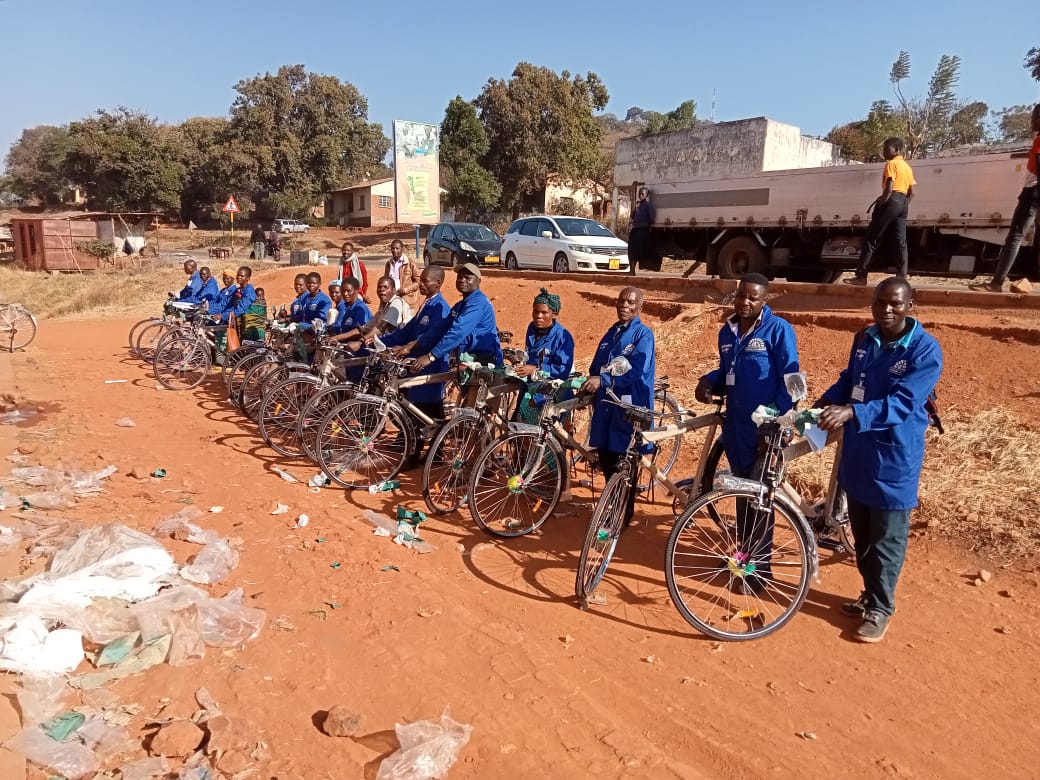
Community vaccinators in Dowa East with their new bikes provided under the ANCP program.
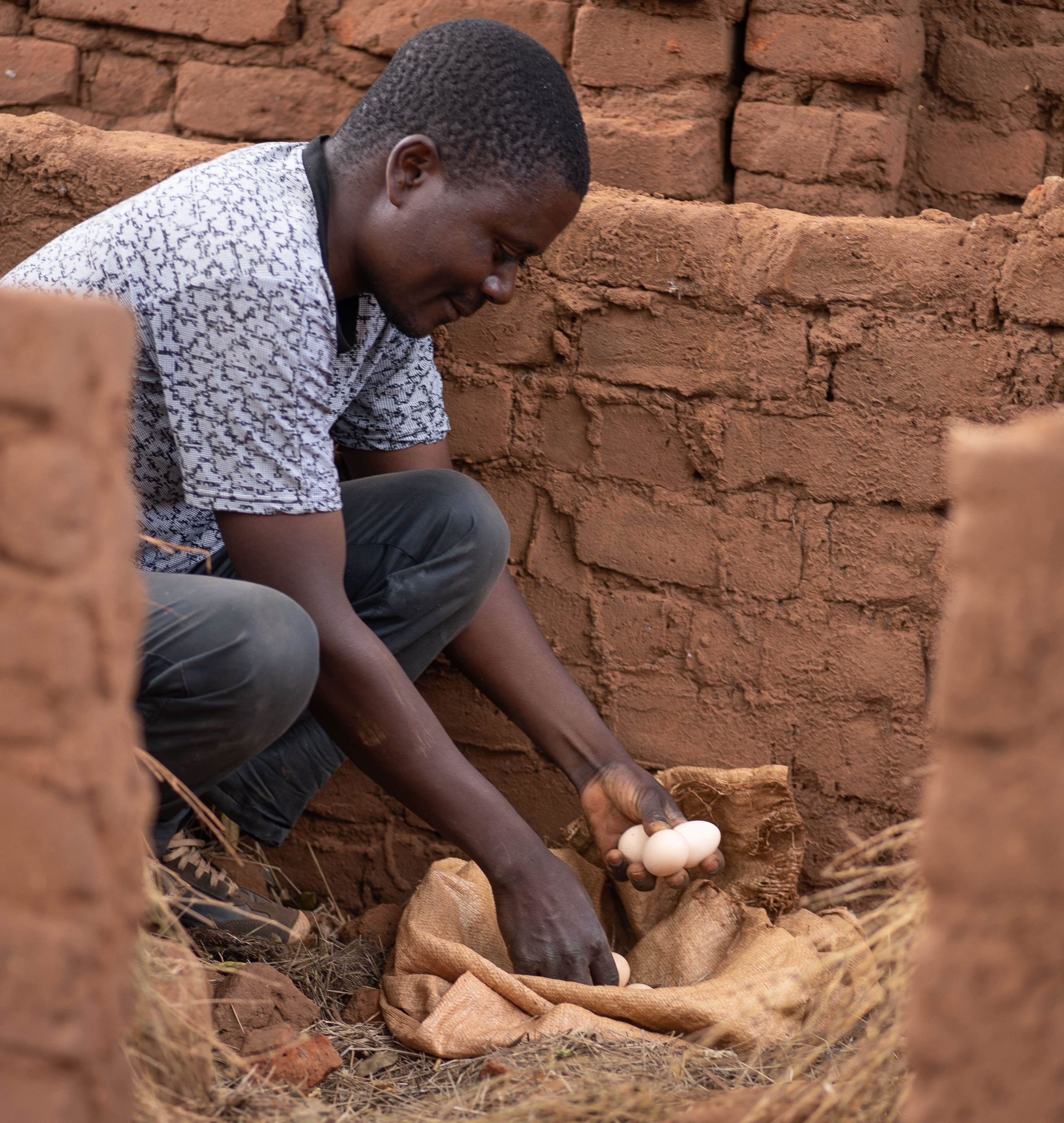
Jefule collecting eggs from a chicken nest
More importantly, why?
Malawi is among the world’s poorest countries. The majority of its population relies on agriculture, and for over half of rural households, chickens are the most accessible form of livestock. They’re affordable, require few resources, and offer a critical source of nutrition and income, especially for women-led households.
Yet, the biggest threat to this vital resource is Newcastle Disease, a preventable illness that can kill entire flocks in a matter of days. Despite the availability of a low-cost vaccine, most chickens remain unvaccinated due to lack of awareness, training, and access.
This project is about more than just chickens, it’s about empowering communities to take control of their food systems. It’s about dignity, resilience, and local solutions that last. By working with community vaccinators, we’re helping households safeguard a source of protein, diversify income, and reduce reliance on costly chemical inputs.
Most of all, we’re supporting locally driven development because real change happens when solutions come from within.
Expected Outcomes
Will this work contribute to ongoing change?
Sustainability is at the heart of this project. The vaccination model is designed as a micro-business generating income for vaccinators without relying on subsidies. Demand for vaccines is driven by the visible benefits: fewer chicken deaths, better nutrition, and stronger livelihoods.
Our work doesn’t end with the project. Ongoing support and monitoring will continue beyond the project period to ensure long-term success and adaptability.
We measure our outcomes against indicators set out for the specific globally recognised sustainable development goals for 2030

Thanks to our donor
We are grateful for the support of the Australian Government’s Department of Foreign Affairs and Trade through the Australian NGO Cooperation Program, which makes this important work possible. Their funding is helping us partner with local communities to create a positive and lasting impact.

Thanks to our partner
Related articles
 https://kyeemafoundation.org/wp-content/uploads/2024/09/Feature-Image-1.png
735
887
Kate Hampson
https://kyeemafoundation.org/wp-content/uploads/2022/07/Kyeema-Foundation-logo-400w-resize.png
Kate Hampson2024-09-11 12:54:252024-09-17 11:28:12Empowering Communities Through The Success of the VP4BL Project
https://kyeemafoundation.org/wp-content/uploads/2024/09/Feature-Image-1.png
735
887
Kate Hampson
https://kyeemafoundation.org/wp-content/uploads/2022/07/Kyeema-Foundation-logo-400w-resize.png
Kate Hampson2024-09-11 12:54:252024-09-17 11:28:12Empowering Communities Through The Success of the VP4BL Project https://kyeemafoundation.org/wp-content/uploads/2023/07/Screenshot-2023-07-04-103106-e1688431182820.png
333
1132
Eliza Smith
https://kyeemafoundation.org/wp-content/uploads/2022/07/Kyeema-Foundation-logo-400w-resize.png
Eliza Smith2023-07-06 09:28:322023-07-06 10:00:38Improving Rural Livelihoods in Malawi Through Village Poultry in Dowa East
https://kyeemafoundation.org/wp-content/uploads/2023/07/Screenshot-2023-07-04-103106-e1688431182820.png
333
1132
Eliza Smith
https://kyeemafoundation.org/wp-content/uploads/2022/07/Kyeema-Foundation-logo-400w-resize.png
Eliza Smith2023-07-06 09:28:322023-07-06 10:00:38Improving Rural Livelihoods in Malawi Through Village Poultry in Dowa East https://kyeemafoundation.org/wp-content/uploads/2022/09/Mchinji-Nelesi-September-2022-1.jpg
665
1181
Eliza Smith
https://kyeemafoundation.org/wp-content/uploads/2022/07/Kyeema-Foundation-logo-400w-resize.png
Eliza Smith2022-09-27 22:01:152023-07-03 11:39:33Demonstrating outcomes for rural households in Malawi
https://kyeemafoundation.org/wp-content/uploads/2022/09/Mchinji-Nelesi-September-2022-1.jpg
665
1181
Eliza Smith
https://kyeemafoundation.org/wp-content/uploads/2022/07/Kyeema-Foundation-logo-400w-resize.png
Eliza Smith2022-09-27 22:01:152023-07-03 11:39:33Demonstrating outcomes for rural households in MalawiIf you’d like to support our work, your donation can help us do even more. Every contribution helps us support rural communities to improve their livelihoods.