Thermotolerant Vaccines in the Control of Newcastle Disease in Village Chickens

A History by the late Emeritus Professor Peter Spradbrow

Emeritus Professor Peter Spradbrow

Emeritus Professor Peter Spradbrow

Always remembered 16/10/1934-31/03/2017

Veterinary and virological interest in Newcastle disease virus dates from the 1920s. Early studies included the development of vaccines, and vaccines are a continuing enterprise. In Australia vaccine studies became possible after 1966 when it was demonstrated that avirulent strains of Newcastle disease virus were endemic in local flocks. Until then Newcastle disease was not recognised in Australia except for a brief incursion in the 1930s.The commercial poultry industry sponsored the first vaccine trials with the new virus, strain V4. Later, when the ACIAR initiated projects on protecting village chickens against Newcastle disease, V4 was available as a potential vaccine. ACIAR support continued for some 15 years and other national and international agencies eventually became involved.
Where did Newcastle disease come from?

With what event do we start a history of Newcastle disease? For readers of the English language the initial study is usually accepted as that of Doyle in 1927. He described a “new” disease of chickens that occurred at Newcastle-upon-Tyne in the UK during the previous year. He was able to distinguish it from the major infectious disease of chickens recognised at that time and called fowl plague. The causal virus of fowl plague was eventually shown to be an influenza virus and the disease is now called avian influenza. Newcastle disease also entered the Dutch literature with outbreaks, also in 1926, at sites in present day Indonesia. The new disease spread rapidly to involve the developing chicken industries in many countries.

Lancaster (1966) has written an interesting account of the documented early spread of Newcastle disease. He postulates that there may have been earlier outbreaks that were not adequately described. Of interest to the present audience, Lancaster mentions suggestions that a disease that may have been Newcastle disease was transmitted from Asia to Africa in the mid 19th century. This speculation originated in two cited reports, in Portuguese, from veterinary institutes in Mozambique. It would be of interest if these reports from 1950 and 1961 still exist.

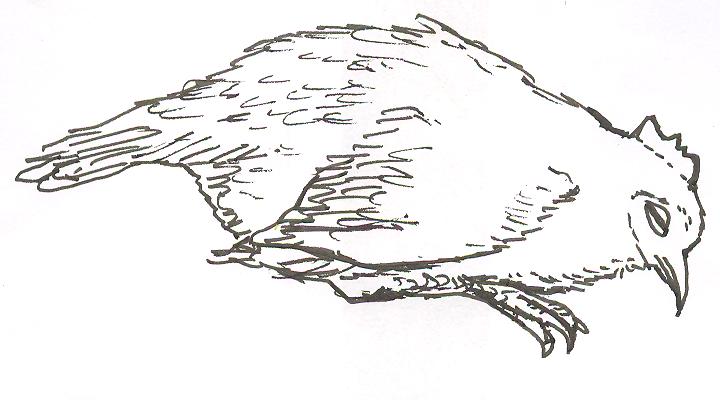
Newcastle disease suffering

We know now that Newcastle disease presents in several clinical forms. It is possible that only severe epizootics attracted early attention and that milder forms of the disease had long been present in small chicken flocks. Increase in virulence could be attributed to changes in the virus or to changes in husbandry of commercial chickens. It seems certain that the early spread of the disease was facilitated by movement of live birds by land and by sea.

The developing commercial poultry industry at that time was obliged to come to terms with this disease. Flocks of village chickens had no protection from the devastating disease.

Source: Wikimedia commons

The Australian story

For many decades Australia was presumed to be free of Newcastle disease. The disease had entered during the pandemic spread in the 1930s but had been eradicated by the classical methods of detection of infected or potentially infected flocks and slaughter. The causal virus, usually termed the Albiston Gorrie strain, was isolated and preserved. This is probably the oldest strain of Newcastle disease virus still available.

In Australia Dr (later Sir Macfarlane) Burnet undertook studies on the Albiston Gorrie virus. He showed for the first time that Newcastle disease virus could be cultivated in fertile hen eggs and that the virus present in allantoic fluid could be detected by a simple haemagglutination test. He further found that a simple haemagglutination inhibition test served to detect anti-viral antibody. Some sixty years later we still rely on these tests in our studies of Newcastle disease virus. Burnet also demonstrated that Newcastle disease virus could produce conjunctivitis in infected people.

With the eradication of the original outbreaks and the confinement of the Albiston Gorrie strain to a few laboratories, Australia enjoyed three decades without Newcastle disease. In 1966 Simmons in Brisbane (Simmons 1967) isolated an unusual strain of Newcastle disease virus from a local chicken. This virus, strain V4, was less pathogenic than even the mildest vaccine strains used in other countries. It caused no clinical signs when it spread between chickens by natural routes, it did not kill inoculated embryos and it produced few cytopathic changes in cultured chicken cells. Newcastle disease viruses with these properties are now termed “avirulent”. Prof. Spradbrow’s group and other workers soon found that such avirulent viruses were widespread in Australia. They had probably been present for some time but were unrecognised because they caused no disease.

There were two consequences. First, because the importation of any live Newcastle disease virus into Australia was forbidden the commercial industry had no access to vaccines. Australian virologists could now investigate strain V4 as a vaccine. These studies were restricted to antibody responses except in one high security laboratory that was permitted to use the Albiston Gorrie strain as a challenge virus. Other work had to be done overseas where virulent challenge viruses were available. Prof. Spradbrow’s own studies were undertaken with colleagues at the Universiti Pertanian Malaysia. An excellent cooperative understanding was developed. V4 proved to be a proficient vaccine, eventually going into commercial production for the commercial industry.

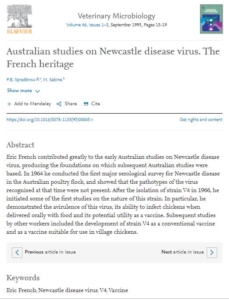
Science Direct article of I-2

The second consequence was a renewed interest in Newcastle disease virus by basic virologists. Here was a single virus that in nature supported strains that varied greatly in virulence. Some produced no clinical signs while others would kill all infected birds. Medical virologists with an interest in pathogenesis were fascinated.

Prof. Spradbrow had suggested to the poultry industry in the late 1980s that the danger with Newcastle disease in Australia was probably from a gradual increase in the virulence of Australian endemic viruses. The accidental introduction of virulent, foreign viruses seemed a lesser risk. His team looked at a collection of 45 contemporary Australian isolates but found none to cause disease in chickens (Spradbrow et.al., 1995). These 45 isolates contained the strain now known as I-2. Soon after this the local strains did change, being associated at first with other agents in the production of mild respiratory disease and finally causing clinical Newcastle disease. This was eradicated by conventional methods.

Recently developed techniques in molecular virology have allowed a partial explanation of the changes in virulence. Sequential genetic alterations can be mapped. Differentiation of virulent virus, progenitor virus that requires only a minor genetic change to become virulent, and the background V4-like viruses is now possible in the laboratory. With the elimination of the virulent virus, vaccination with V4 vaccine is used to suppress the progenitor virus.

Newcastle disease vaccines for village use

Vaccines for use in commercial flocks were produced by the standard contemporary approaches for the control of serious veterinary diseases. Crude inactivated vaccines were produced first and then virulent virus was applied together with antiserum. A later refinement was the use of viable attenuated vaccines.

These sophisticated vaccines have served the commercial industry well but they have found little use in village flocks, which are small, multi-aged and scattered. The chickens range freely during the day and are not always confined at night. Cold chains are rarely available. Commercial packaging makes the vaccines too large for village flocks and too expensive for village farmers. Governments have been unwilling to use foreign exchange to import avian vaccines.

The culture of village chicken production has not been conducive to vaccination. The owners of the chickens are usually village women- already overworked, often illiterate and neglected by government agencies. Extension workers have favoured ruminant animals and the men who manage them.

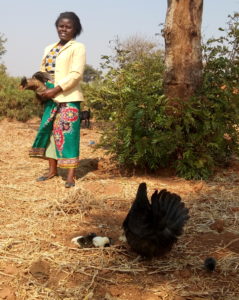
Lizzi Jamu Village Champion Ntchisi Malawi

Source: Pat Boland, RPC Malawi

When the newly formed ACIAR started to support research activities in 1984 a major problem that came to their notice was that of Newcastle disease in village flocks. In many developing countries Newcastle disease was the greatest impediment to productivity of rural chickens. They saw the need for a new vaccine appropriate for the task, rather than trying to utilise the existing commercial vaccines with the deficiencies noted above.

My team suggested:

Producing a new vaccine based on V4. They knew that V4 was relatively heat resistant and a highly heat resistant variant had already been selected in Prof. Spradbrow’s laboratory.

Delivering the vaccine on food. Village chickens in Malaysia at that time were rarely housed.

Selecting a vaccine that would spread between chickens. Chickens can cheaply vaccinate other chickens.

Producing vaccine locally. Imported vaccine would not be sustainable.

Using non-SPF eggs. They could make a safe vaccine in eggs from a well-managed farm.

Accepting a moderate level of protection. Vaccination under village conditions could not yield 100% protection.

The initial ACIAR projects

The concept for this project arose from discussions between Dr John Copland of ACIAR and Professor Latif Ibrahim from the new veterinary faculty in the Universiti Pertanian Malaysia. Prof. Spradbrow became involved because of previous collaborative work with the Malaysian group on V4 vaccine. Australia, a country then free of clinical Newcastle disease, had a history of work with the virus.

The first trials, conducted jointly by the University of Queensland and the Universiti Pertanian Malaysia, used variants of strain V4, artificially selected for enhanced heat resistance. Following successful laboratory and field trials, ACIAR supported a regional approach with confirmatory studies in Indonesia, Philippines, Thailand and Sri Lanka.

In the initial trials, V4 vaccine was presented to chickens on food. This was a concession to the lack of physical control over the chickens at the time. Eye drop vaccination has proved more effective and is now advocated where husbandry conditions are favourable.

When V4 became a commercial vaccine a new vaccine strain was required for village use to avoid legal complications. ACIAR sponsored the development at the University of Queensland of a new vaccine master seed. The result was strain I-2, another Australian avirulent virus that had properties, including heat resistance, similar to V4. The master seed, controlled by ACIAR and held at the University of Queensland, is available without cost to developing countries.

Tests with the heat resistant vaccines V4 and I-2 have been undertaken in many countries in Asia and Africa. Some of the countries have adopted one or other of these vaccines and produced them on a large scale. Vietnam is a particular example where local initiative has seen full exploitation of the vaccine.

ACIAR KYEEMA

Projects in Asia

ACIAR decided to continue the project in Malaysia and Australia and to expand it to involve Indonesia, Philippines, Sri Lanka and Thailand. An Australian support team was recruited. This included poultry production experts, pathologists, economists and epidemiologists.

Successful vaccine trials were reported from each country. It became apparent that, where chickens could readily be caught, eye drop vaccination was preferable to food vaccination. Some considered that provision of housing would be part of the price of access to vaccine. I still see this as a choice for local farmers and veterinary authorities. Oral vaccination will become increasingly important in all species and I encourage further research on food carriers for Newcastle disease vaccines.

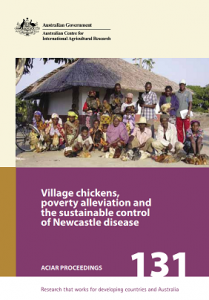
ACIAR conducted a further international workshop in Malaysia. The Proceedings indicated to a wide audience that Newcastle disease could be controlled in village chickens (Spradbrow, 1992).

ACIAR and other agencies have supported the production and use of I-2 vaccine in further Asian countries. FAO funded the initial studies in Myanmar and ACIAR has encouraged the use of the vaccine in many areas of the country. UNHCR fosters use of the vaccine in a remote refugee area of Myanmar on the border with Bangladesh. AusAID supported a successful project in Bhutan. Vietnam was a special case. A small ACIAR project allowed the production and laboratory testing of I-2 vaccine. This was successful and Prof. Spradbrow’s Vietnamese colleagues told him they would conduct field trials without further financial assistance. The vaccine is now registered and a national laboratory (NAVETCO) produces some 14 million doses of I-2 each year (Tu, 2001). Some is exported to Cambodia and the Lao Republic. I-2 master seed has also been sent to Iran and successful laboratory tests have been reported from China.

Several other Asian countries are attempting to control Newcastle disease in village chickens but they are using conventional heat-labile vaccines. It is of interest that the complex village chicken project in Bangladesh, often referred to as the Bangladesh model, seems to have developed from an initial enterprise focused on the control of Newcastle disease.

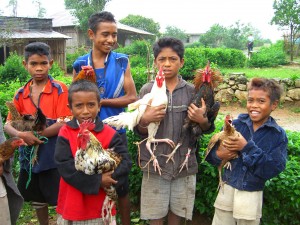
Source: Peter Spradbrow

Projects in Africa

Newcastle disease has also been an enduring problem in village flocks in Africa. Local scientists had learnt of the new heat resistant vaccines from the ACIAR workshops in Asia and FAO workshops in Africa. Both V4 and I-2 master seeds have been produced at PANVAC in Ethiopia. Further distributions from this source are not well documented. I-2 or V4 master seeds have gone from Australia to countries including South Africa, Uganda, Nigeria, Zimbabwe, Ghana, Mozambique and Senegal. Mauritius produced its own master seed from V4 virus obtained from a virus repository in the USA. V4 vaccine from Malaysia has been used in The Gambia. Commercial V4 vaccine has been used in West Africa.

Studies that resulted in formal publications are easier to tra

ce. Dr Robyn Alders has reported effective trials from ACIAR projects in both Zambia and Mozambique. Tanzanian workers have tested both V4 and I-2 vaccines in the laboratory and in the field. Dr Ann Foster tested V4 vaccine in villages near Dodoma in Tanzania on an ACIAR project. She showed that villagers and NGOs, without formal input from government or universities, could conduct successful trials.

The Australian government funded Southern Africa Newcastle Disease Control project (SANDCP) resulted from a planning workshop. All the countries of the SADC were invited to the workshop that was held in Maputo. The design team visited many of the SADC countries and most countries sent delegates to a final workshop held in Johannesburg. SANDCP was managed by Dr Robyn Alders and was implemented in Mozambique, Malawi and Tanzania from July 2002 – November 2005. Independent Australian government reviewers noted “The participants in this project can be justifiably proud of it achievements. SANDCP made significant achievements in capacity building, community development and poverty alleviation through developing and implementing a model for Newcastle disease control that should be sustainable. As a result Mozambique, Malawi and Tanzania are now world leaders in the control of Newcastle disease in village chickens and are continuing to produce and use increasing amounts of vaccine. On several occasions during this review, village leaders expressed their appreciation and thanks for the project and the benefits that it had brought to their communities.”

The children supported through the Mama Mkubwa program

Source: Peter Spradbrow

Networks and training

Agencies other than ACIAR have become involved in the projects, supporting vaccine activities in country or training projects at home or in Australia. These agencies include FAO, UNHCR, World Bank, IAEA and AusAID. Many NGOs have been supportive.

Vaccine production and testing was only the foundation for the successful projects. Sustainable vaccination campaigns have required vaccine production in-country and this depended on appropriate training at international workshops or at the University of Queensland.

Practical workshops concerned with vaccine production and vaccination have been required to transfer skills. Six short training workshops sponsored by ACIAR and other agencies have been held in developing countries. These were in Pretoria (for 16 African countries), in Dar es Salaam (for Tanzania and Mozambique), and in Ghana, Myanmar, Bhutan and Cambodia. Delegates have attended either a short (usually two days) administrative workshop or a longer practical laboratory workshop. The administrative workshops have been taught by Dr Robyn Alders and Professor Peter Spradbrow. Topics have included Newcastle disease, Newcastle disease vaccines and extension activities. Ms Sally Grimes has conducted the practical workshops, concentrating on vaccine production and testing, and serological tests. Intensive laboratory courses, to three months in duration, were conducted at the John Francis Virology Laboratory and funded by various international agencies.

Scattered groups of scientists with common interests have been termed “invisible colleges”. The sources of information mentioned above have helped bind these groups. The internet now allows us to formalise these groups and to share information. The International Network for Family Poultry Development (formerly the African Network for Rural Poultry Development) has been very beneficial. Their website and electronic newsletter are recommended. 

Also essential to the success of projects has been the development of new extension materials and activities. These have targeted all the stakeholders – the women who are the traditional keepers of village chickens, the people who will do the vaccinations, and all the levels of bureaucracy where pertinent decisions are made. Dr Robyn Alders has initiated and developed much of this material.

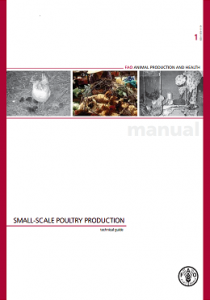
FAO Small Scale Poultry

Some of the manuals available on our resources page.

References

   Alders, R. G. and Spradbrow, P. B. (2001) SADC Planning workshop on Newcastle Disease Control in Village Chickens. Proceedings No. 103. Australian Centre for International Agricultural Research. Canberra. pp 170.

   Doyle, T. M. (1927) Journal of Comparative Pathology 40 144-169. A hitherto unrecorded disease of fowls due to a filter-passing virus.

   Foster, A., Chitukuro, H. R., Tuppa, E., Mwanjala, T. and Kusila, C. (1999) Veterinary Microbiology 68 127-130 Thermostable Newcastle disease vaccines in Tanzania.

   Grimes, S. E. (2002) Report. I-2 Newcastle Disease Vaccine. Summary of Experiments at John Francis Virology Laboratory January 2001 to December 2001.

   Lancaster, J. E. 91966) Newcastle Disease. A Review of Some of the Literature Published Between 1926 and 1964. Monograph No. 3. Canadian Department of Agriculture. Ottawa. pp188.

   Simmons, G. C. (1967) Australian Veterinary Journal. 43 29-31. The isolation of Newcastle disease virus in Queensland.

   Spradbrow, P. B. ed (1992) Newcastle Disease in Village Chickens. Control with Thermostable Oral Vaccines. Proceedings No. 39. Australian Centre for International Agricultural Research. Canberra. pp189.

   Spradbrow, P. B. (1993/94) Poultry Science Reviews. 8 57-96. Newcastle disease in village chickens.

   Spradbrow, P. B., MacKenzie, M. and Grimes, S. E. (1995) Veterinary Microbiology 46 21-28. Recent isolates of Newcastle disease virus in Australia.

   Tu, T. D. (2001) in Alders, R. G. and Spradbrow, P. B. eds SADC Planning Workshop on Newcastle Disease Control in Village chickens. Proceedings No. 103. Australian Centre for International Agricultural Research. Canberra. Village chicken production in Vietnam and Newcastle disease control with thermostable vaccine. pp 110-114.