
Village Chickens Supporting Marine Wildlife Conservation in the Conflict Islands
In Papua New Guinea’s Conflict Islands, conservation and livelihoods go hand in hand.
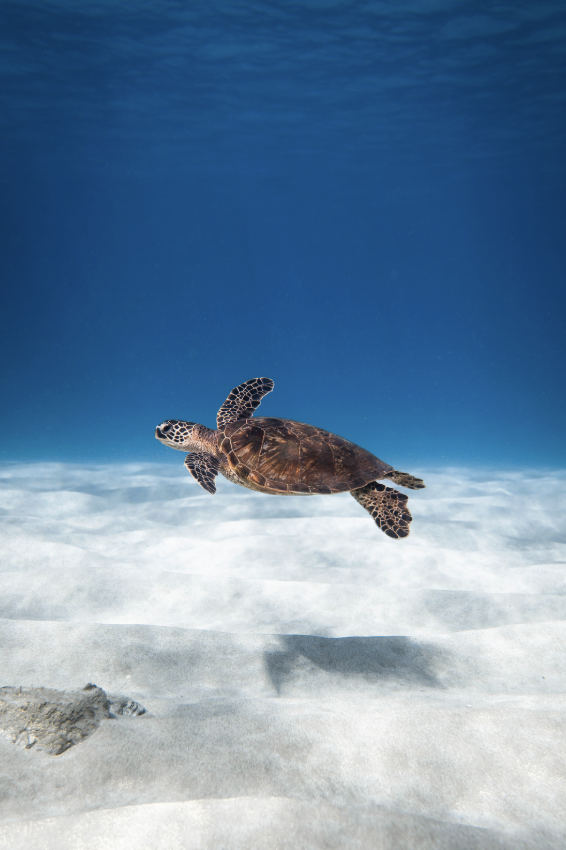
A recent village chicken training is helping communities strengthen food security while supporting efforts to protect turtles, sharks and coral reefs.
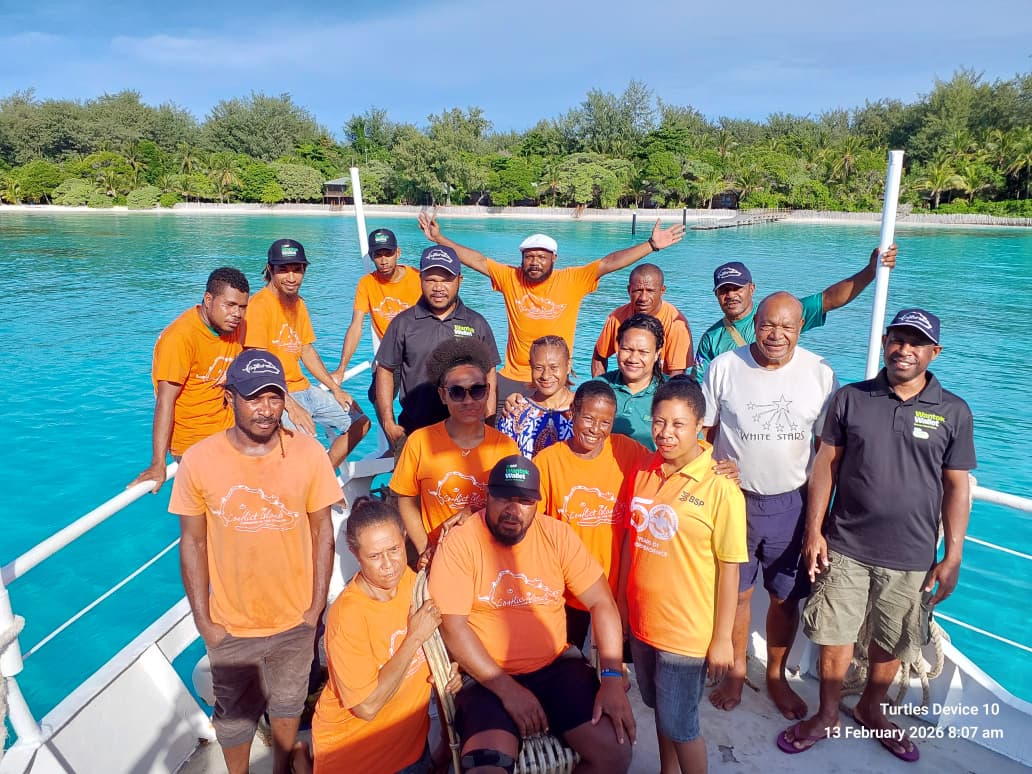
Conflict Island Conservation Initiative (CICI) has partnered with Kyeema in PNG to deliver village chicken training across three communities. The training aimed to strengthen household livelihoods while complementing ongoing community led conservation efforts across the islands. By improving access to reliable sources of food and income, village chickens can help reduce pressure on vulnerable marine wildlife and support long term ecosystem health.
The training formed part of the Empowering Community Conservation Rangers in Papua New Guinea project, led by the Conflict Island Conservation Initiative and funded by Climate Action for a Resilient Asia, a UK Government program. The broader initiative aims to strengthen climate resilience and marine biodiversity across the Conflict Islands by establishing protected areas and equipping communities with the skills and leadership needed to implement adaptive, nature-based conservation and sustainable resource management.
Across the Conflict Islands, communities are already leading conservation efforts to address key environmental challenges, including turtle poaching, shark finning, coral bleaching and marine pollution. These pressures threaten not only biodiversity but also the long-term health of coral reefs, fisheries and marine ecosystems that communities depend on. Through education, community engagement and the strengthening of local conservation ranger programs, communities are working to protect turtle nesting areas, reduce shark finning and safeguard the broader marine ecosystems that sustain their livelihoods.
Training Across Three Island Communities
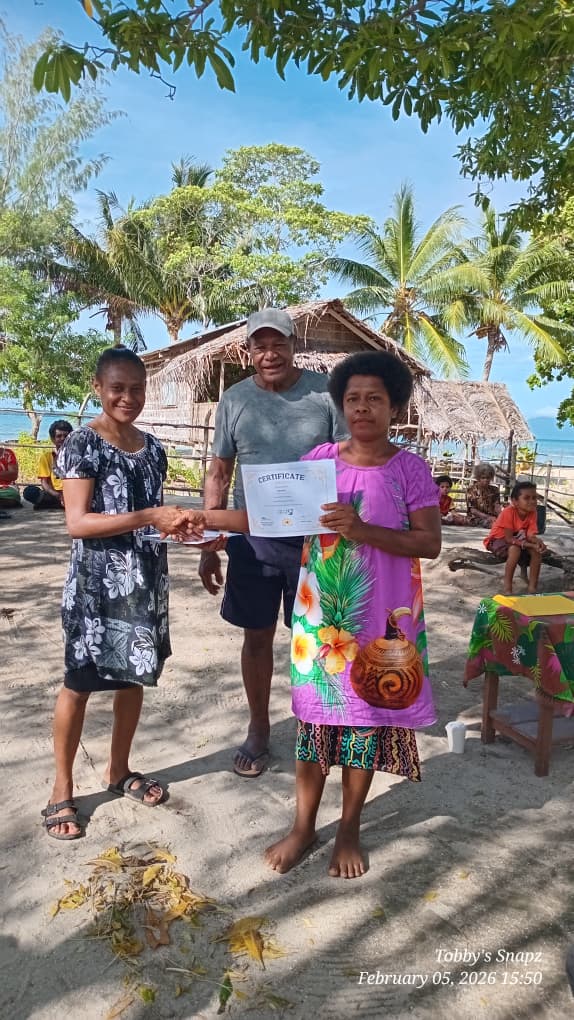
Village chicken keeping training was delivered over three days across three island communities in Milne Bay Province, including Panapompom, East Panaeati and West Panaeati Islands.
A total of 39 community members participated in the training, learning practical skills to establish and manage small scale village chicken systems that support both livelihoods and conservation goals.
Participants were trained in key areas including chicken husbandry, housing, feeding, flock health and egg management. The training also included a marketing module focused on identifying local markets and buyers, determining fair pricing and planning production to meet demand during market days, festivals and community events. Proper handling, hygiene and presentation of chickens and eggs were also discussed to support improved sales outcomes.
These practical sessions were designed to support participants to apply their knowledge and begin developing sustainable poultry enterprises within their communities.
The broader program also includes financial literacy support delivered in partnership with the Bank of South Pacific. Community members had the opportunity to open bank accounts and access banking services, alongside training on managing income from poultry sales and planning for future growth.
By combining livelihood training with financial inclusion, the initiative aims to support communities to build sustainable income streams and strengthen long term resilience.
Supporting Community Led Conservation
Alongside the village chicken training, the Conflict Island Conservation Initiative continues to support conservation ranger training and marine ecosystem protection across the Conflict Islands. This ranger program is a pioneering initiative in Papua New Guinea, empowering Indigenous communities to become stewards of their own land and sea while protecting vulnerable marine species and strengthening climate resilience.
We are grateful to our partners at the Conflict Island Conservation Initiative for bringing Kyeema Foundation PNG into this important work, and to the Bank of South Pacific for supporting financial literacy and inclusion alongside the training. We look forward to continuing our partnership towards a shared vision for a more resilient Papua New Guinea.
Related Articles
 https://kyeemafoundation.org/wp-content/uploads/2024/05/8-rs.png
650
1300
Kate Hampson
https://kyeemafoundation.org/wp-content/uploads/2022/07/Kyeema-Foundation-logo-400w-resize.png
Kate Hampson2024-05-27 10:12:382024-05-27 10:12:38Reefs of Hope: Supporting a Community Led Approach to Save Our Coral Reefs
https://kyeemafoundation.org/wp-content/uploads/2024/05/8-rs.png
650
1300
Kate Hampson
https://kyeemafoundation.org/wp-content/uploads/2022/07/Kyeema-Foundation-logo-400w-resize.png
Kate Hampson2024-05-27 10:12:382024-05-27 10:12:38Reefs of Hope: Supporting a Community Led Approach to Save Our Coral Reefs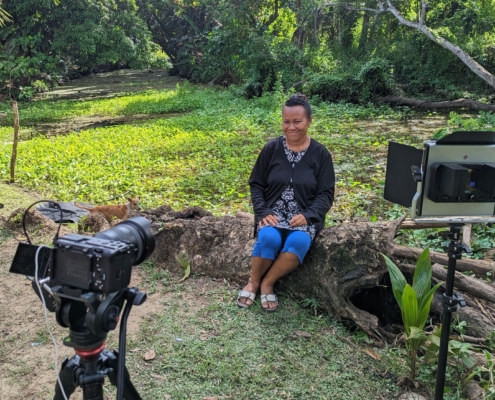 https://kyeemafoundation.org/wp-content/uploads/2023/11/Icon-Image--scaled.jpg
1988
2560
Eliza Smith
https://kyeemafoundation.org/wp-content/uploads/2022/07/Kyeema-Foundation-logo-400w-resize.png
Eliza Smith2023-11-21 14:09:192023-11-23 12:45:35Targeted training videos for keeping healthy and productive chickens in the Pacific released
https://kyeemafoundation.org/wp-content/uploads/2023/11/Icon-Image--scaled.jpg
1988
2560
Eliza Smith
https://kyeemafoundation.org/wp-content/uploads/2022/07/Kyeema-Foundation-logo-400w-resize.png
Eliza Smith2023-11-21 14:09:192023-11-23 12:45:35Targeted training videos for keeping healthy and productive chickens in the Pacific released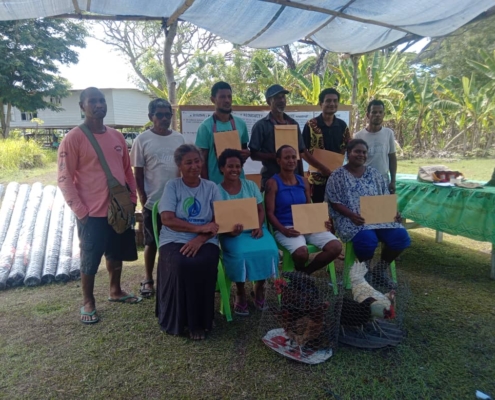 https://kyeemafoundation.org/wp-content/uploads/2023/09/22.11-Gabagaba-training-8.jpeg
780
1040
Eliza Smith
https://kyeemafoundation.org/wp-content/uploads/2022/07/Kyeema-Foundation-logo-400w-resize.png
Eliza Smith2023-09-28 16:57:122024-09-25 15:58:24Locally led training for food and nutrition security in Papua New Guinea
https://kyeemafoundation.org/wp-content/uploads/2023/09/22.11-Gabagaba-training-8.jpeg
780
1040
Eliza Smith
https://kyeemafoundation.org/wp-content/uploads/2022/07/Kyeema-Foundation-logo-400w-resize.png
Eliza Smith2023-09-28 16:57:122024-09-25 15:58:24Locally led training for food and nutrition security in Papua New Guinea
